
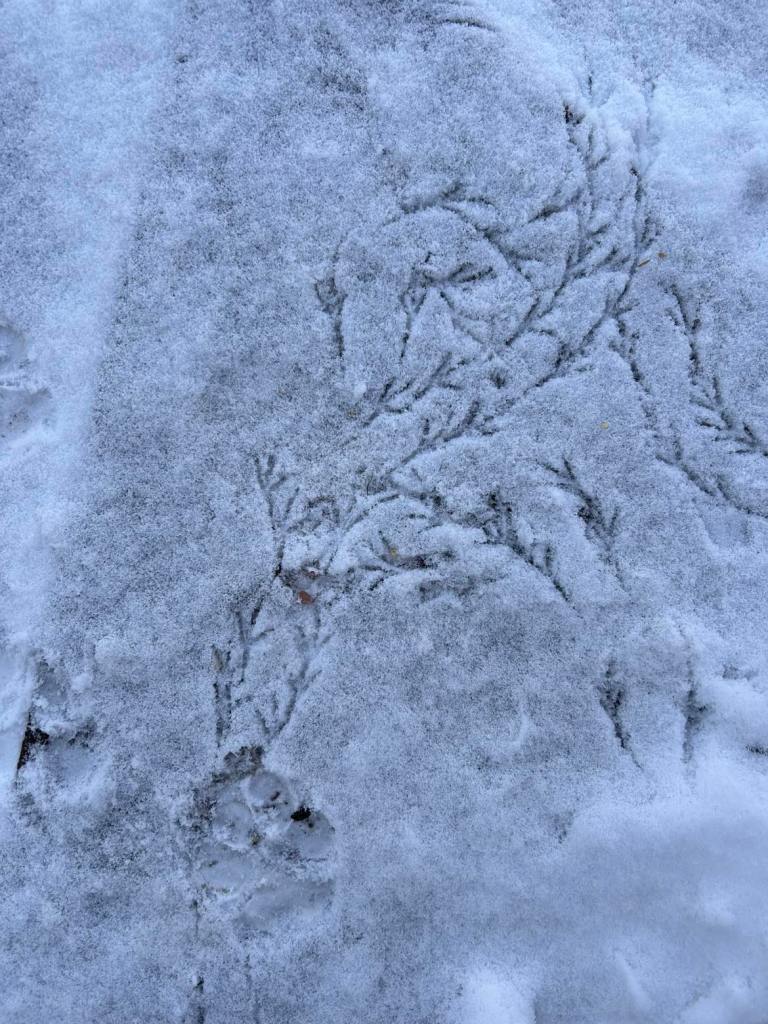
Our part of town is over a hundred years old with historic houses built pretty close together and aged lawns, flower beds and tree-lined streets. There are plenty of old trees and swaths of ancient shrubbery coursing through the yards and alleys. Our proximity to the foothills of the Rocky Mountains (just a few blocks away), Clear Creek (a block to the north) and two large mesas (to the east) creates a lively mix of landscapes. The setting creates an opportunity to see a variety of birds as they move seasonally north or south along the Front Range or east and west from the plains to the mountains.
We keep two birdfeeders in our back yard; just off the kitchen where we can watch them when we’re seated at the table or washing the dishes. One is limited to sunflower seed for the big birds and the other contains a wild bird mix that the smaller birds seem to like. Both feeders get a lot of attention, and lately I’ve needed to refill the “wild bird” feeder weekly. I suspect this is new frequency is due to the arrival of a flock of starlings that converge on the feeder and surrounding area at specific times to the exclusion of the other birds.
The sunflower feeder attracts a Hairy Woodpecker, jays, and magpies, although all of those will also visit the other feeder — often raking through the smaller seed to get to the sunflower seeds and bigger bits in the mix. Several doves, a flicker, nuthatches, chickadees, finches and lots of LBB’s and LGB’s are routinely present. The fallen seed serves to feed our considerable squirrel population and a family of mice that live in the flower bed beneath the feeder.
I’ve noticed that while the doves gently jockey for position at the feeder, the starlings seem to argue and battle more than they actually feed. The doves are adept at making large swooping dives at the feeder, usually in pairs, that drive all the other birds away … at least temporarily.
Our big dog likes to stalk and chase the squirrels in the yard, particularly when they descend to the ground or the flower bed. She seldom catches any, but did recently grab one squirrel’s tail and throw it around before it escaped. She will also terrorize the bigger birds that come to the ground for the spilled seed, but seems to have no intention of catching any of those. The two cats prowl the same area, and the younger one is pretty adept at catching unwary mice and toying with them until the dog interrupts the game or the mouse succumbs to its injuries.
There’s also a bunny or two that live beneath the garden shed next to the alley, and enjoy the security of the quick escape offered by the fence and blackberry bushes. I see them in the early morning, but they stay away during the day when the dog is around. She obviously smells their pathways and works that part of the yard whenever she goes out. Of course, she also scents the raccoons that occasionally visit our compost pile back there, but they seem to only come by at night when the dog is inside. Sometimes when we let her out before bedtime, she races around the back of the yard along the alley chasing, I suspect, a raccoon or the recent scent of one.
In all, the birds are more noticeable in the winter as they tend to congregate more at the feeders as a source of food in the time of scarcity. In the warmer months we hear their calls more, I suppose due to the open windows and the greater time we spend outdoors. I find the gentle cooing of the doves alluring, but the harsh screeches of the jays are a bit too edgy. Most of the others seem to chirp or squawk less intrusively. The flickers, woodpeckers, jays and magpies make a variety of interesting whistles or chirps.
Additional information:
Steve Tarlton, Just Chillin’, 10/26/23, Writes Of Nature
 Writes of Nature