
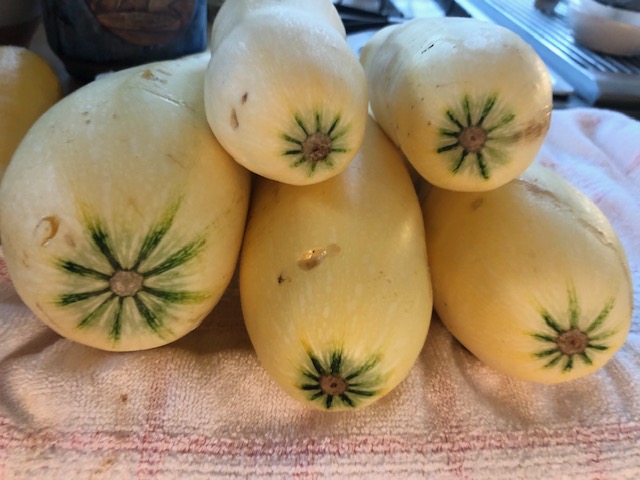
Shortly after moving into our house — over forty years ago — we created a vegetable garden that stretched across the entire width of the back of the yard with a wire fence to keep the dog out. There were a couple of elderly rose bushes that we removed to other parts of the yard, and the space that was left allowed for both the usual veggie plantings plus additional room for sprawling pumpkin and squash plants.
Later, when our son got into basketball, we poured a concrete pad over part of that garden area and, when his interests moved on, it became a patio. But, to one side of the original vegetable garden, we built four raised garden boxes so as to minimize the strain on my back caused by bending over for weeding and plant tending in general. Compost from our pile could now be more easily distributed across the beds, too.
My garden has always been a little haphazard. I sketch out plans early in the spring, usually around the time when the Nichols Garden Nursery catalog arrives. I pour through the pages of usual plants — but can easily be distracted by something new or exotic. Volunteers from previous efforts or from the compost pile survivors are examined and their value weighed. In the end, I usually have more seeds than space for plants.
The culling process requires some knowledge of plant identification and knowing which are weeds. Writer Jennifer Kabat notes, “Just how a plant is designated a weed and not an herb or a flower involves complex histories of medicine, food, language and migration. I realized that if I learned about these unwanted plants, I wouldn’t have to battle them.”
Given my relaxed attitude about the garden, I don’t spend a lot of time battling weeds or in complex historical study. I clear them out if they’re in the way, but generally leave them to themselves.
Kabat continues, “In the weeds I find a palimpsest of capitalism and colonialism, a living history of globalization … They refuse to stay in the boxes we create for them. This is true of all plants, but especially for the ones we call weeds. In them I see intimations of what’s possible and a promiscuity that flouts the strictures that colonialism and capitalism have built.”
Writer, and cultural critic Olivia Laing says, “I’ve always thought of gardens as benign, even virtuous places … While very few of us create gardens on a robber-baron scale, the experience of the pandemic made it clear that they can still be a privileged and exclusionary zone. According to a 2021 study, white Americans are nearly twice as likely to live in a home with access to a garden as Black or Asian Americans.”
So, I guess I will continue my efforts to flout the strictures of colonialism and capitalism. My reward will likely be fresh tomatoes, various squash, beans, peas, carrots, beets and several kinds of greens. And don’t forget the pumpkins.
“Viva revolution!”
Additional information:
Jennifer Kabat, Why Weeds are Worth Reconsidering, July 9, 2024, The New York Times
Olivia Laing, Gardens of Good and Evil, May 2, 2024, The New York Times

