

The summer camp I attended in central Texas had special events for returning campers. My brother and I were regulars each summer, maybe only partly due to the fact that our uncle Bob was one of the camp operators and lived on site at Inks Lake. In college, he and our father had been on the Texas swim team coached by the camp’s owner. After the war, Bob was recruited to help build Camp Longhorn. Although (naturally) organized around water sports, there were lots of other great activities including archery, tennis, softball, touch football, judo, diving, sailing, water skiing, target shooting, pottery and horseback riding, among others.
One of the special events was a trip into Longhorn Caverns, a natural cavern outside Austin, TX. It was a truly awesome experience, and, for me, connected with the summer movie, Journey to The Center of the Earth. A few years later, our folks took us to Carlsbad Caverns in New Mexico, which was far larger and more developed than the Texas counterpart.
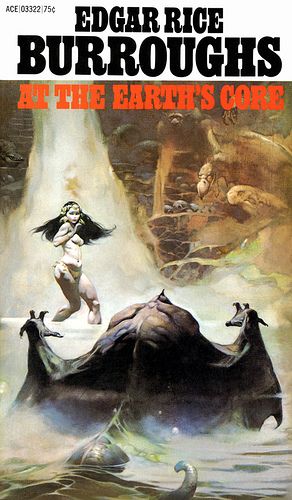
According to the movies and my reading, the “underworld” was mysterious and dangerous. The hollow earth theory, formalized by Edmond Halley in the late 17th century, mirrored earlier beliefs in some kind of subterranean living world. Jules Verne captivated us with Journey to The Center of The Earth, and Edgar Rice Burroughs wrote of the land of Pellucidar at the center of the earth in several novels. Movies, of course, followed.
Science, however, disproved the concept of subterranean habitat and civilizations over time, yet our imagination was sparked and unrelenting. Recently, Ferris Jabr reported in the New York Times magazine, “Scientists like Osburn have shown that, contrary to long-held assumptions, Earth’s interior is not barren. In fact, a majority of the planet’s microbes, perhaps more than 90 percent, may live deep underground. These intraterrestrial microbes tend to be quite different from their counterparts on the surface. They are ancient and slow, reproducing infrequently and possibly living for millions of years.”
“Like the many tiny organisms in the ocean and atmosphere, the unique microbes within Earth’s crust do not simply inhabit their surroundings; they transform them. Subsurface microbes carve vast caverns, concentrate minerals and precious metals and regulate the global cycling of carbon and nutrients. Microbes may even have helped construct the continents, literally laying the groundwork for all other terrestrial life.”
As if Burroughs and Verne needed any validation, those recent studies provide a glimmer of support for the original fantasy stories. Strange unknown life forms exist beneath our feet, living their lives and reproducing unbeknownst to us! I suspect we will not find ancient human civilizations or prehistoric creatures below us, but there are mysteries there that we do not yet fully comprehend.
Jabr continues, “Earth is not simply a terrestrial planet with a bit of life on its surface; it’s a planet that came to life. Earth is a rock that broiled, gushed and bloomed: the flowering callus of a half-sealed Vesuvius suspended in a bubble of breath. Earth is a stone that eats starlight and radiates song, whirling through the inscrutable emptiness of space — pulsing, breathing, evolving — and just as vulnerable to death as we are.”
Additional information:
Ferris Jabr, Under World, June 30, 2024, The New York Times
Edgar Rice Burroughs, At the Earth’s Core, 1914
Jules Verne, Journey to The Center of The Earth, 1867
 Writes of Nature