
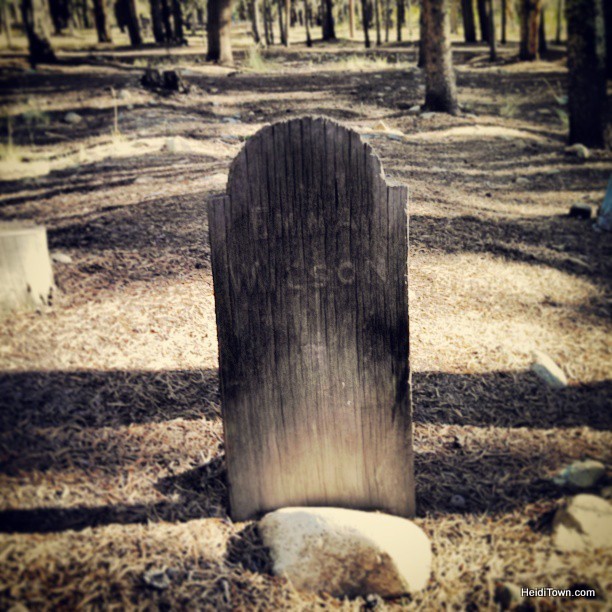
I suppose I’m lucky that I haven’t had to spend a lot of time at funerals, but as I get older, I guess that will change. I have had to go to services in churches or funeral homes, but seldom have gone to any graveside funerals. Most of the cemeteries where they were held were tree-lined roads encompassing acres of mown green grass scattered with headstones. It was all trimmed, green and precise, neater than my bedroom back home or even my yard.
I suppose creating and maintaining these lush spaces is a way to honor the dead, but it seems like a waste of space and resources. Obviously, it is not for the benefit of the dead, but for those they left behind. I’m sure that those neat green spaces are appropriate for later visitors to the graves, but I’m not really sure that it makes much sense or accomplishes what it may be intended for.
My memories of the people I have lost are not tied to a plot of ground in a sanitized park, but to the places where they lived and where I knew them. I have kept memorabilia associated with some people, and can remember and honor them as I choose. I have some articles of theirs, and scads of photos and, maybe, letters to help me reconnect with them.
I do not expect that when I visited their graves, they will appear to me as a wisp of smoke; nor do I expect that they will rise from their graves for a chat (or vengeance or restitution). Memories can be found anywhere, and I don’t feel that being at the site of their burial creates a connection. Unlike the tombs of ancient Egypt, or the catacombs beneath some Catholic churches, our grave sites are buried and gladly inaccessible. My imagination of what happens to a dead body over time is good enough to keep me awake some nights – the movies are bad enough and I don’t want to experience that directly.
So, our cemeteries present us with the sanitized version of post-death. We embalm bodies and encase them in steel containers so that decay occurs in an unnatural manner over very long time periods. But the headstones are maintained, the grass is mown and the leaves are raked – neat and tidy.
Of course, the older cemeteries can get a little ramshackle and untended. I find visiting these to be a better, more evocative and natural, experience. The vegetation is wilder and maybe overgrown and more in keeping with long-dead people. And, I believe that those areas are better environmentally. There are probably less chemicals used in maintenance, less energy used in mowing and less disturbance of the various critters that may live or visit there. Certainly, allowing the trees to flourish is beneficial to both air quality and the birds, not to mention the occasional visitor. These places can be parklike and serene, and suitable for quiet reflection.
Cemetery burial, of course, is just one option for our deceased. Some places offer burial within mulched sapling roots, allowing the tree to grow as, essentially, the tombstone. Cremation eliminates the need for dedicated plots of ground and people are creative about how to honor the loved-ones’ ashes. Scattering them across the sky, in fields or over the ocean seems to be among the most popular, besides keeping them in an urn on the mantle.
However, there is something captivating about an old cemetery. The tombstones can be unusual or have interesting information. There may be catchy rhymes or unusual sentiments about the deceased. They can tell sad tales about family circumstances and provide reminders about our own finite existence.
While working in the Utah desert far from any habitation, I came across a grave marked with an old rotted board as a headstone. It had been originally painted white and some of the writing was still vaguely legible. An old cowboy had met his end out there, and he remains on the wide-open desert. That seems, to me, to be a fitting resting place for him. May we all be so lucky.
 Writes of Nature