
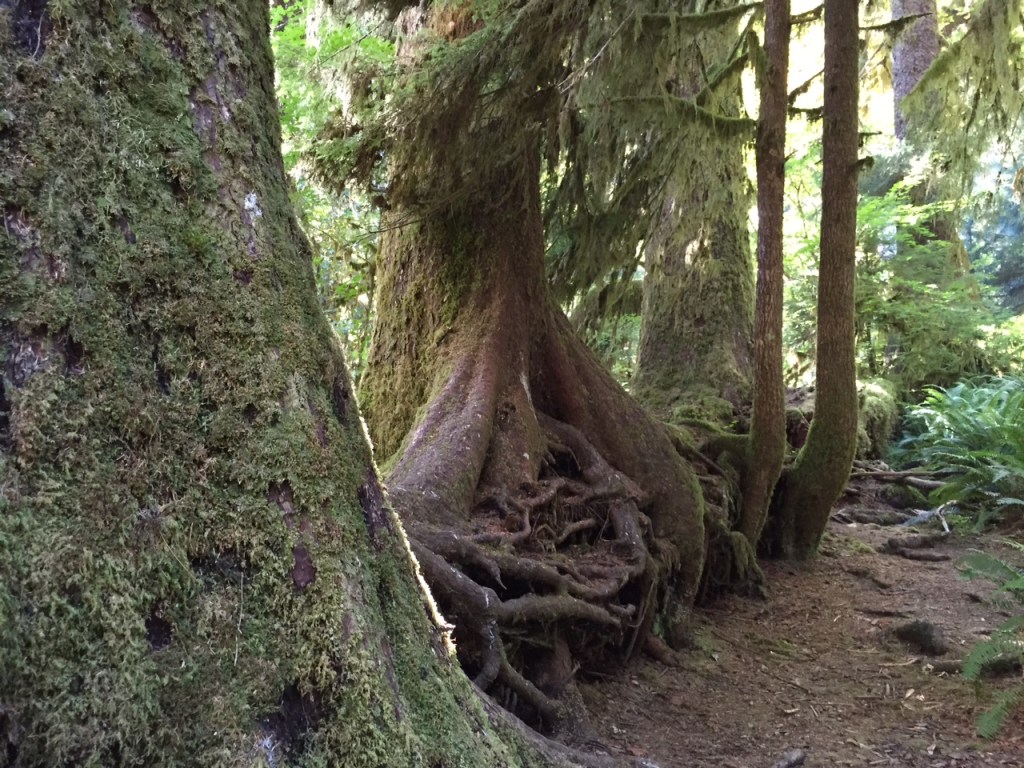
“Trees are poems that the earth writes upon the sky.”
— Kahlil Gibran
I grew up very near the 30” rainfall line that transverses Texas and the entire U.S. from north to south and reflects the significant climate differences. Science writer Harvey Leifert described it as follows:
“It separated “cattle country” from “farm country”. Crops require more water than Longhorns. The 30-Inch Rainfall Line now generally follows Interstate Highway 35.”
“In his 1878 Report on the Lands of the Arid Region of the United States, (John Wesley) Powell identified the ‘arid region’ as the land west of the 51-centimeter-per-year rainfall line, which closely tracked the 100th meridian. This amount of rainfall per year is about the minimum that permits farming without irrigation, and it also greatly influences the types of crops that can be grown … Powell’s original goal in describing the effective 100th meridian as a dividing line was to persuade the federal government to bear in mind the greater aridity when planning for settlement and development in the western territories, which would be very different than in the moisture-rich east.”
Outside of the towns and cities, you can anticipate that east of the line you will find pine trees, Live Oaks and actual forests of deciduous trees. West of the line is dominated by scattered trees and thickets of mesquite. To the west are the dry, wind-swept plains; to the east it tends to be green. Of course, local conditions effect the actual vegetation. Streams and river-beds host cottonwoods nearly everywhere, and fence lines tend to collect Russian olives and other trees like the mesquite — maybe more bush than tree. There used to be a place west of Fort Worth on a bend of the Brazos River where a massive pecan tree grew in the center of a large field. It was spectacular.
Books and movies are full of giant trees in magical forests where gnomes and elves and, maybe even unicorns, can be spotted. Witches and wizards make their homes in the tree trunks, as did Pooh, but it is hard to imagine them living in the mesquite thickets around where I lived. However, in the summer, we could see lightning bugs flickering across the lawns and through the shrubbery.
Urban areas in Texas have a variety of trees. A city park down by the river is named Forest Park due to the abundance of large trees. (As a kid, I knew it was not in honor of Confederate General and founder of the Ku Klux Klan, Bedford Forrest due to the spelling.) It was noteworthy enough that the outdoor scenes of our third-grade play, Robin Hood, were videotaped there. Though not as lush and green as Sherwood Forest in the actual Robin Hood movie, it was still a magical place.
The street where I grew up was fronted by two large sycamore trees. In Sunday school, we read a Bible story about Zacchaeus hiding from Jesus in a sycamore tree. It got me thinking about how you would do that. Our sycamores were tall and bare-trunked up to about ten feet, making climbing difficult. They were also rather sparse, and I gave little credence to someone being able to hide in the branches, no matter how bad Jesus’ eyesight was. I learned to take the Bible stories with a grain of salt.
Trees were important in Texas in the summer. First, there was the shade. I can still remember what an immense joy it was to sit or lie in the green grass in the shade of a tree and feel the (cool) breeze blowing the sweat away. Locally, we also had many fruit and nut trees that flowered in the spring and provided a plethora of goodies in the fall. The trees also host a variety of birds and small critters. If you were lucky and persistent, you could make friends with a chickadee or squirrel.
The Tarzan films and the Swiss Family Robinson book and movie got us all interested in building a tree house where kids could spend time out of the way (sight?) of the adults. Unfortunately, none of the trees in my neighborhood would support more than one kid, much less a structure. A friend had a rudimentary platform in one of their trees, but it was a little shaky and, as I was a biggish kid, he was reluctant for me to try it out. My dad intervened and built us some monkey bars where we could swing and fall to our hearts’ content, but I’m not sure that our mother was pleased.
I have since lived in other places, including relatively treeless Oklahoma and Arizona, but also California, Georgia, Alaska and Colorado where the trees are plentiful and forests spectacular. On long drives, from the backseat, I’ve always been fascinated by the highway-side farm fields where crop rows flash by like flipping the pages of a book. Driving in the South and Northwest, I experienced the same thing with the tree plantations that go on seemingly for miles. There’s a stretch of I-84 in Oregon near the Columbia River where tree farms line the interstate and provide a mesmerizing page-flip effect as you speed along.
I’ve read that humans evolved in the oceans and we are comfortable on the shorelines. While deep, dark forests seem menacing, I find a copse or small wood to be a comfort. You can breathe freely, listen to the birds, and the trees remind you to slow down, take your time and just be.
Let it be.
Additional information:
Dividing Line: The Past, Present and Future of the 100th Meridian, Harvey Leifert, January 9, 2018, Earth, The Science Behind the Headlines
 Writes of Nature